
Wonderful, professional and friendly service from the staff and doctors. I am very pleased with the service and the crown! This was my first visit, they got me in the morning after I broke a tooth. I will definitely recommend and return to this office.
Karen G.
5.0

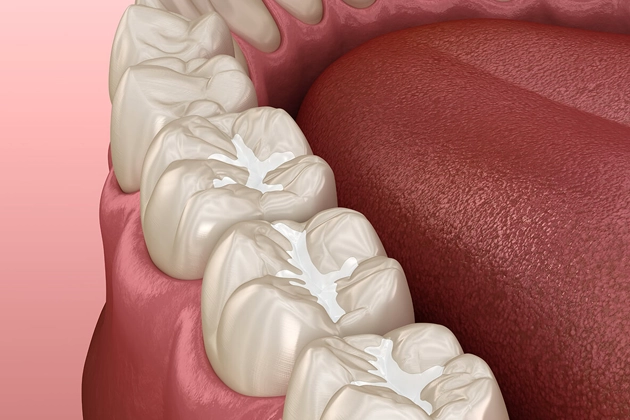
Preventive Dental Sealants
Brushing alone can sometimes overlook the intricate structures on the chewing surfaces of your teeth.
This is where sealants come into play. These thin coatings are applied to the chewing surfaces to block bacteria and debris from penetrating the deep grooves on the tops of your teeth.
Sealants were first developed around 50 years ago but gained popularity in the 1970s. Nowadays, they are widely recognized as an effective preventive measure; young children are ideal candidates for sealants, as they often have not yet experienced tooth decay. Our experienced dentists in Mesa have shown that sealants can even help protect teeth that already have some decay from further damage.
The application of sealants begins with cleaning the surface of the tooth. Next, the tooth is etched with an abrasive material to enhance the sealant’s adhesion. Once the sealant is applied, a warm light is used to accelerate the drying process. Typically, sealants require re-application every five to ten years.
Frequently Asked Questions
Dental sealants are thin, protective coatings applied to the chewing surfaces of back teeth (molars and premolars). They create a smooth barrier that blocks food particles and bacteria from settling into grooves and pits, significantly reducing the risk of cavities, especially in children and adults prone to decay.
Sealants are recommended for children and teens as soon as permanent molars emerge to prevent decay early. Adults without existing fillings or decay can also benefit. They are particularly useful for individuals with deep tooth grooves or a history of cavities, helping protect vulnerable areas before damage occurs.
No, applying dental sealants is a painless and non-invasive process. The dentist cleans and dries the tooth, then carefully places the sealant material. It bonds quickly to the teeth without drilling or anesthesia. Most patients experience no discomfort and can return to normal activities immediately.
Sealants typically last several years with proper care. Regular dental checkups help monitor their condition and determine when reapplication is needed. Good oral hygiene habits, including brushing and flossing, help maintain sealants and maximize their effectiveness in preventing cavities.
While sealants significantly reduce the risk of cavities on the chewing surfaces of back teeth, they do not replace regular brushing, flossing, or routine cleanings. Sealants are most effective when combined with daily oral hygiene and professional dental exams to protect all areas of the mouth.
No. Although sealants are commonly used in children to protect new permanent teeth, adults can benefit too — especially those who are cavity-prone or have deep grooves. Sealants can strengthen defenses against decay at any age when applied by a dentist based on individual oral health needs.
During a dental sealant appointment, the dentist cleans and dries the tooth surface, then applies a safe bonding agent. Sealant material is placed and hardened with a special light. The entire process takes only minutes per tooth and can often be completed during a routine checkup.
Yes, sealants can wear down or chip over time due to chewing pressure. Regular dental exams allow your dentist to check sealants and reapply them as needed. If a sealant is missing or compromised, restoring it promptly helps maintain the continued cavity protection it provides.
Sealants do not require special care beyond good oral hygiene. Continue brushing twice daily with fluoride toothpaste, flossing daily, and attending regular dental checkups. These habits help preserve sealants and ensure optimal protection against decay across the entire mouth.
Many dental insurance plans cover sealants, especially for children and teenagers. Coverage can vary by plan and age. The Okun Dentistry team can help verify your benefits and explain any out-of-pocket costs so you understand how insurance applies to sealant placement.