
Dentures
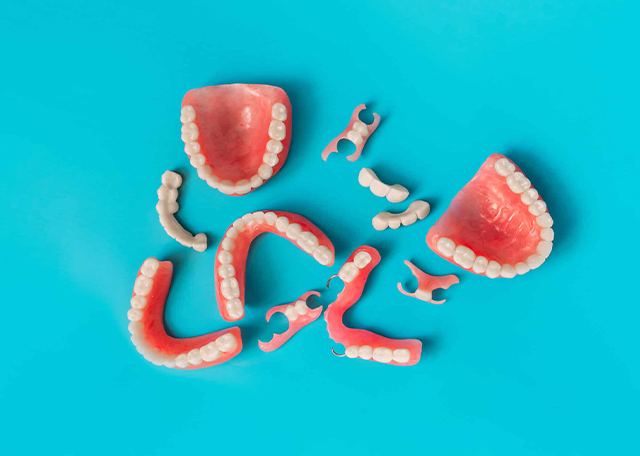
Types of dentures available
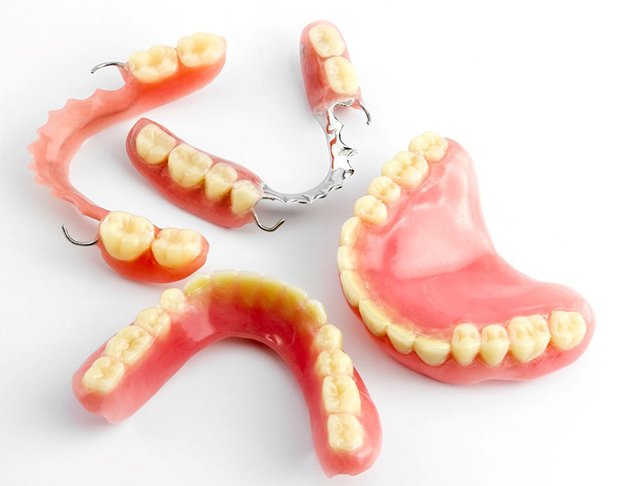
Complete dentures are designed to replace all of the natural teeth, while partial dentures fill the gaps left by missing teeth, helping to prevent neighboring teeth from shifting.
Individuals who qualify for complete dentures have lost most or all of their teeth, whereas partial dentures are ideal for those who still have some natural teeth remaining. Dentures enhance chewing ability and speech while providing support for facial muscles, significantly improving both facial appearance and smile.
Full dentures are utilized when all of your natural teeth are absent. They can be fitted for either the upper jaw, lower jaw, or both.
Complete dentures are categorized as “conventional” or “immediate,” depending on when they are created and inserted into the mouth. Immediate dentures are placed right after the remaining teeth are extracted. To facilitate this process, the dentist takes measurements and creates models of the patient’s jaws during an initial visit.
One benefit of immediate dentures is that the patient does not have to go without teeth while healing. However, it’s important to note that bones and gums may shrink over time, especially during the healing phase in the first six months post-extraction. As the gums shrink, immediate dentures might need to be rebased or relined to ensure a proper fit. Once the tissues have healed, which can take at least 6-8 weeks, a conventional denture can be made.
An overdenture is a type of removable denture that fits over a limited number of remaining natural teeth or implants. The natural teeth must be prepared to provide the necessary stability and support for the denture.
Partial dentures are typically recommended when multiple teeth are missing.
Removable partial dentures usually consist of replacement teeth attached to a pink or gum-colored plastic base, connected by a metal framework. They secure to your natural teeth using metal clasps or precision attachments. Precision attachments are often more aesthetically pleasing than metal clasps, as they are nearly invisible. For an optimal fit, crowns may be placed on your natural teeth, especially when using attachments. Generally, partial dentures with precision attachments are more expensive than those with metal clasps.
How are dentures created?
The denture creation process typically spans about a month and involves five appointments: the initial evaluation, taking impressions and a wax bite to establish vertical dimensions and jaw alignment, a “try-in” to check the color, shape, and fit, and finally, the placement of the completed denture, which may require minor adjustments.
To begin, a precise impression of your jaw is taken using specialized materials. Alongside this, measurements are recorded to determine the relationship between your jaws and the amount of space between them (bite relationship). The shade of your natural teeth is also assessed. This impression, along with the bite and shade information, is sent to the dental laboratory to create a customized denture tailored to your mouth.
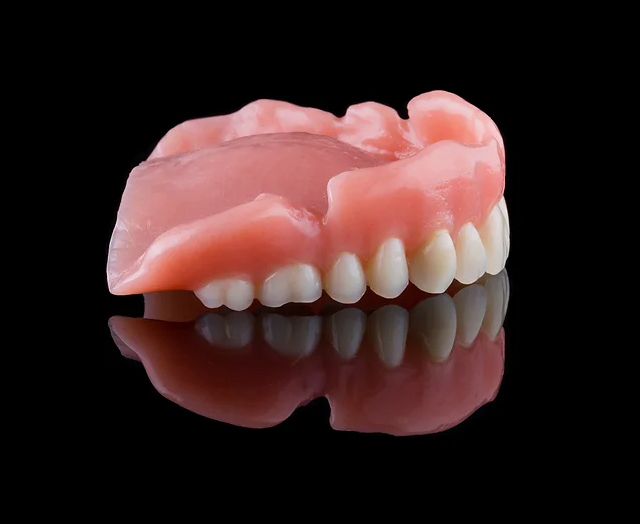
The dental lab creates a mold or model of your jaw and arranges the teeth in a wax base, sculpting the wax to achieve the desired shape of the final denture. Typically, a “wax try-in” occurs at the dentist’s office, allowing for any necessary adjustments before the denture is finalized.
To complete the denture, the dental laboratory utilizes the “lost wax” technique. A mold of the waxed denture is created, after which the wax is removed, leaving a cavity that is filled with pink plastic in a malleable state. The mold is then heated to solidify the plastic, and once polished, the denture is ready for you to wear.
Adapting to your denture
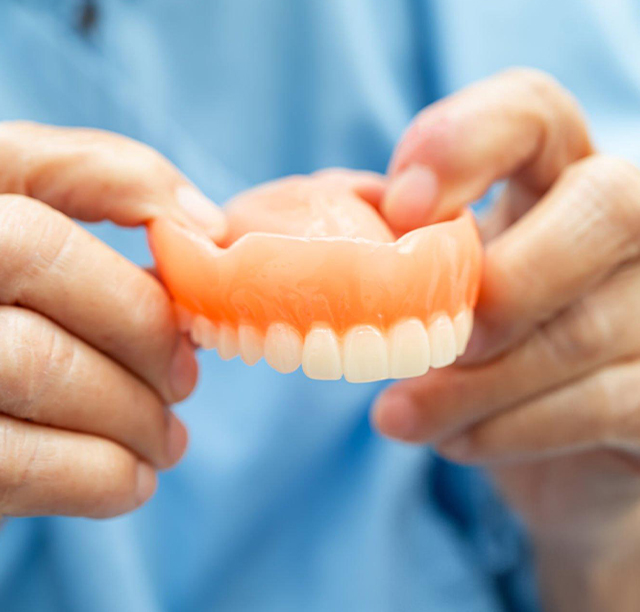
In the initial weeks, a new denture may feel strange or bulky, but your mouth will gradually adapt to it. You’ll need to practice inserting and removing the denture; it should fit snugly without needing to be forced into place. Avoid biting down to push a partial denture into position, as this could damage the clasps.
Initially, you might be advised to wear your denture continuously. While this may be somewhat uncomfortable at first, it’s the fastest way to identify areas that may need adjustment. If the denture exerts too much pressure on a specific spot, it could become sore, and adjustments can be made for a better fit. After adjustments, you might need to remove the denture at night and put it back on in the morning.
Begin by consuming soft foods that are cut into small pieces. Chew evenly on both sides of your mouth to distribute pressure on the denture. It’s best to avoid sticky or hard foods, including gum.
Maintaining your denture
When handling your denture, it’s advisable to stand over a folded towel or a sink filled with water to prevent damage in case you drop it. Clean your denture daily, ideally with a denture brush, to remove food particles and plaque and to prevent stains. Use a brush with soft bristles to avoid damaging the denture. Choose denture cleansers that have the American Dental Association (ADA) Seal of Acceptance. Pay particular attention to cleaning the teeth that fit under the denture’s metal clasps, as trapped plaque can lead to tooth decay.
Using hand soap or mild dishwashing liquid is also suitable for cleaning dentures. Avoid using household cleaners and many toothpastes as they can be too abrasive. To maintain its shape, a denture should be kept moist. At night, place your denture in a soaking solution or water. Be cautious with metal attachments, as they may tarnish if soaked in the solution.
Even with full dentures, maintaining good oral hygiene is essential. Every morning, use a soft-bristled brush to clean your gums, tongue, and palate before inserting your dentures. This practice removes plaque and stimulates circulation in your mouth. Additionally, a balanced diet is crucial for overall oral health.

Denture adjustments
Over time, your dentures may require adjustments. As you get older, natural changes in your mouth can impact how well your dentures fit. Bone and gum ridges can shrink or recede, leading to a loose fit. Loose dentures can cause discomfort, sores, or infections. If your dentures become ill-fitting, it’s important to have them professionally adjusted. Avoid attempting to adjust them yourself, as this can cause irreversible damage. Over-the-counter adhesives often contain harmful chemicals and should not be used on your dentures.
If your denture no longer fits properly, breaks, cracks, chips, or if a tooth becomes loose, visit your dentist immediately. Often, dentists can make necessary adjustments or repairs on the same day. More complex repairs may require sending the denture to a specialized dental lab.
Over time, dentures will need to be relined, rebased, or replaced due to normal wear and tear. To reline or rebase a denture, the dentist reuses the existing denture teeth and either refits the denture base or creates a new one. Dentures may need to be replaced if they become loose or if the teeth show significant wear.
Typical issues
Eating with dentures will require some practice. Begin with soft foods cut into small pieces, and chew slowly using both sides of your mouth simultaneously to avoid tipping the dentures. As you get used to chewing, gradually introduce other foods until you return to your regular diet.
Always chew using both sides of your mouth at the same time. Be mindful of hot, hard foods and anything with sharp edges, like bones or shells.
Many people are concerned about how dentures will impact their speech. Think about how your speech is affected when several of your natural teeth are missing.
Adhesives for dentures
Denture adhesives can enhance the stability of well-fitting dentures. However, they are not a remedy for dentures that are old or do not fit properly. A poorly fitting denture can lead to ongoing irritation and potentially result in sores. Such dentures may require relining or replacement. If your dentures start feeling loose or cause significant discomfort, it’s important to see your dentist right away.