
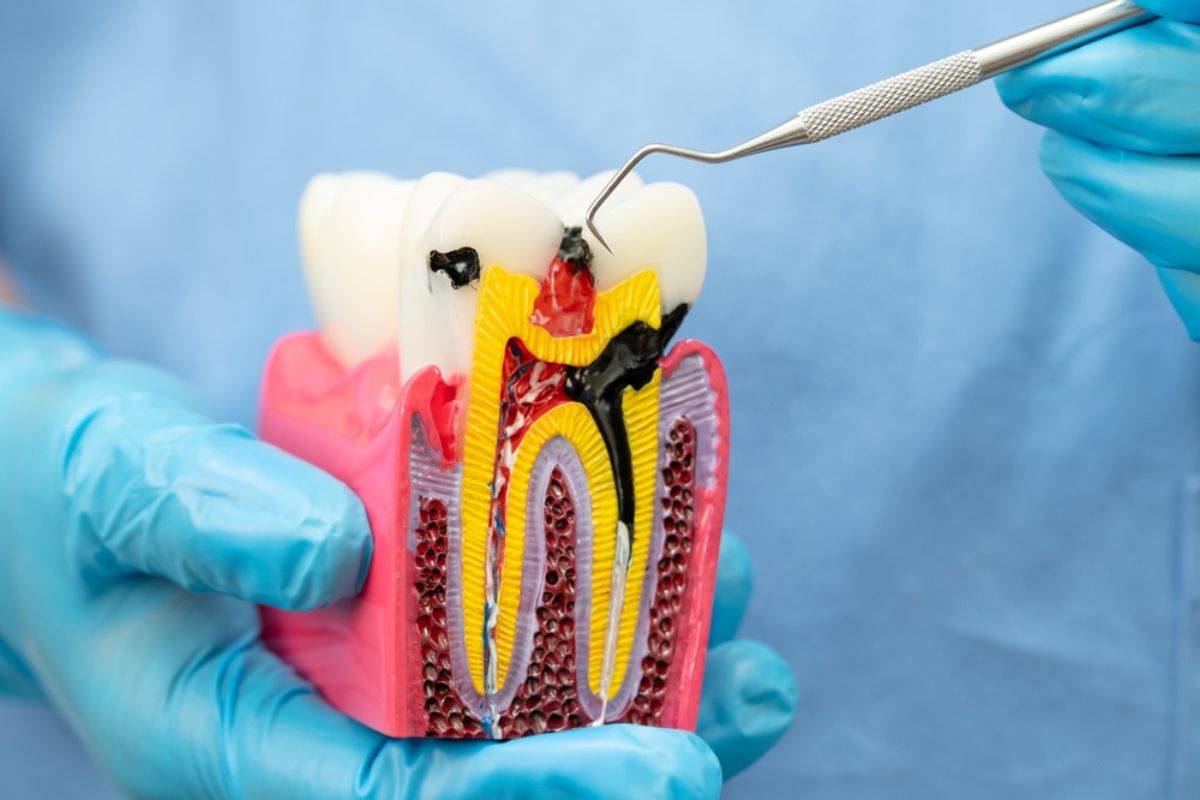
When dealing with a painful, infected, or badly damaged tooth, patients are often faced with two treatment options. You can either remove the tooth entirely or try to save the remnant structure with root canal therapy. Both treatment approaches aim to stop the pain and eliminate the infection. Read this blog to explore how root canal treatment work or why they are even better than permanent removal!
What Is a Root Canal?
A root canal is an endodontic procedure that treats the inside of a damaged tooth. The infected pulp tissue is removed, the area is disinfected, and the space is filled and sealed. Root canal therapy is often performed to preserve the natural tooth structure and prevent the infection from spreading. The procedure is performed under local anesthesia, so expect minimal discomfort during the endodontic treatment.
When Does Tooth Extraction Become Necessary?
There are cases when removal becomes the only option. Extraction is the only solution if the tooth is fractured below the gum or lacks enough healthy structure to support a restoration. In such situations, the damaged tooth is removed from its socket, usually under local anesthesia.
What Happens After Each Treatment?
Both endodontic therapy and tooth removal procedures address pain and infection, but the outcomes differ. No treatment works better to keep your natural tooth intact than root canal therapy in Tempe. However, removing the abscessed or damaged tooth leaves a gap in your smile. That spacing may require a replacement, such as a bridge or an implant, to ensure you have a functional smile.
Why Saving the Tooth Is Often Better Than Removal?
Here’s why your dentist may suggest treating a tooth with a root canal instead of extraction.
- Preserve Natural Tooth Structure: Every tooth has a purpose in how you chew and speak. Saving it maintains jaw stability and helps avoid the shifting of nearby teeth. Once a tooth is removed, the surrounding teeth may start to move, altering your bite and causing discomfort.
- Less Trauma to Surrounding Areas: The root canal procedure only targets the interior of the damaged tooth. This limits the impact on the gums and jaw. Removing a tooth can be more invasive and might require extra procedures later to restore what was lost.
- Lower Risk of Post-Treatment Complications: Common complications after extraction include dry socket, bleeding, and infection. Most patients recover faster with fewer issues after undergoing root canal therapy in Tempe. You also avoid potential bone loss that may otherwise need tooth removal.
How Does Root Canal Therapy Work?
The treatment begins with digital imaging to evaluate the extent of the infection. After local anesthesia is applied, the dentist creates a small opening in the top of the tooth. Your dentist then uses special tools to clean out the infected tissue from inside. Once cleaned and shaped, the space is filled with a biocompatible material to seal it from further infection. Finally, a crown is placed to restore the tooth’s strength and appearance.
While both procedures aim to fix serious dental problems, keeping your natural tooth is often the better long-term choice. It supports better oral function, lowers the risk of complications, and avoids future tooth replacement. Speak with our dentist today or visit our dental office to evaluate your situation and root canal treatment.