
I was impressed with the dentist and staff. The hygienist who cleaned my teeth, Kevin, is the best hygienist I ever met. He is kind and careful and the entire experience was without stress. I did not have to wait long and am so pleased with this dental office. My first visit but not my last as I plan to get my care from them. I highly recommend this dentist office.
- Jan R.
5.0

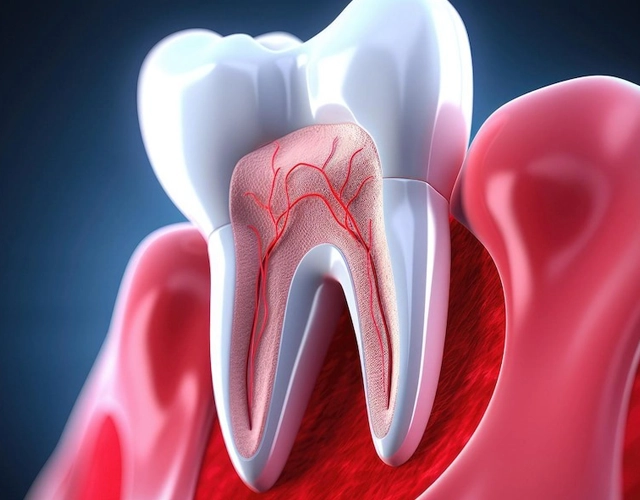
Why Choose Okun Dentistry For Endodontic Retreatment in Mesa, AZ?
- Decades of Proven Specialty Experience & Training
- Focus on One-on-One Care That Puts Patient’s Needs First
- The Latest in Endodontic Technology & Techniques
While root canal therapy is a highly effective procedure, it’s important to note that it doesn’t always guarantee lifelong success. Some treated teeth may develop issues again over time. At our endodontic clinic in Mesa, AZ, we offer several advantages to ensure optimal outcomes. List of advantages, such as advanced technology, experienced specialists, etc.
Advanced Techniques: Our team of experienced endodontists in Mesa, AZ, utilizes the latest techniques and technology to provide effective and comfortable treatments.
Personalized Care: We understand that each patient’s needs are unique. Our approach involves creating personalized treatment plans tailored to your specific concerns, ensuring the best possible outcomes for your dental health.
Cutting-Edge Facilities: At Okun Dentistry, our state-of-the-art endodontic facility in Mesa, AZ, is equipped with modern technology, enabling us to deliver the highest quality care.
Experienced Team: Our team of highly skilled endodontists in Mesa, AZ, brings extensive knowledge and experience to every case. We’re equipped to handle even the most complex endodontic procedures.
Endodontic Retreatment: If you’re experiencing pain or discomfort in a previously treated tooth, endodontic retreatment may be necessary to reinvigorate the healing process and save the tooth. Contact Okun Dentistry in Mesa, AZ, for assistance.
Why Do I Need Endodontic Retreatment?
There are several factors that may necessitate endodontic retreatment, including:
- Inadequate initial treatment: The root canals may have been too narrow or curved to be treated effectively.
- Complex canal anatomy: The tooth's root canal anatomy may have been more complex than initially realized.
- Salivary contamination: Saliva may have entered the tooth despite the restoration.
- Delayed restoration: A dental crown or other restoration may have been placed too late.
- Secondary decay: New decay may have exposed the filling material to bacteria.
- Tooth injury: The tooth may have been fractured or otherwise damaged.

How Does Endodontic Retreatment Work?
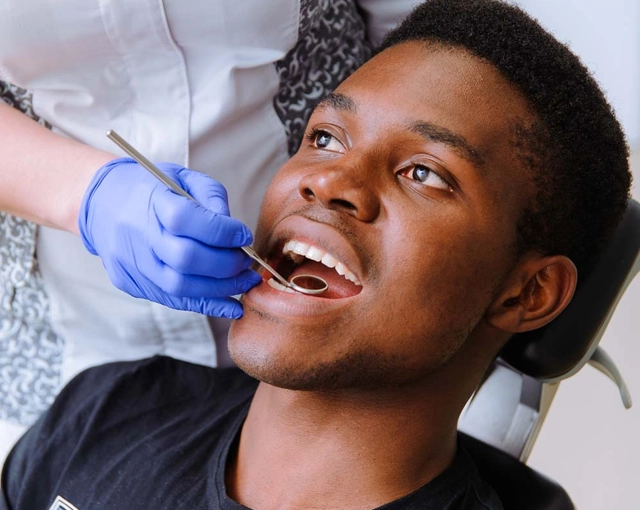
Our endodontists will carefully re-open the tooth to access the filling material, remove it, and thoroughly clean the canals. Using our state-of-the-art microscope, we’ll identify any abnormal anatomy or hidden root canals.
Once the canals are clean, they’ll be filled and sealed to prevent infection. If the canals are narrow or blocked, endodontic surgery may be recommended for a more secure seal.
You’ll then need to visit your general dentist to receive a new dental crown or restoration to restore the tooth’s appearance, shape, and function.
Is Endodontic Retreatment The Best Choice For Me?
We strongly recommend endodontic retreatment whenever possible, as it offers a viable alternative to tooth extraction. Preserving your natural tooth is generally preferable to the cost and time involved in replacing it with dental implants, bridges, or dentures.
By investing in endodontic retreatment, you can:
- Save your natural tooth
- Maintain your original smile
- Achieve lasting oral health and function
Frequently Asked Questions
During endodontic retreatment, the dentist reopens the tooth to access the internal canal system. The previous filling material is carefully removed so the canals can be cleaned again. This allows any remaining bacteria, hidden canal branches, or reinfection to be addressed before the tooth is resealed. The goal is to create an environment where healing can occur and the surrounding tissues can recover.
While retreatment has a high success rate, no dental procedure is guaranteed. Healing depends on factors such as tooth structure, infection severity, oral hygiene, and timely restoration after treatment. Following post-treatment instructions and maintaining regular dental visits helps reduce the risk of future problems.
Many patients notice a reduction in pain or pressure within a few days after retreatment. Mild tenderness can occur as the surrounding tissues heal, but ongoing or worsening symptoms should be evaluated. Healing times vary depending on how long the infection was present and how the body responds to treatment.
Retreatment is more complex than an initial root canal because the dentist must work through existing materials and navigate changes inside the tooth. It requires careful technique and planning, but it is a commonly performed procedure when a previously treated tooth shows signs of infection or failure.
Endodontic retreatment is performed when a previously treated tooth develops new infection or symptoms. This may happen if bacteria re-enter the tooth or if complex canal anatomy was not fully treated initially. The canals are reopened, cleaned again, and resealed to promote healing and preserve the tooth.
Cracked teeth may require different endodontic approaches depending on the depth and direction of the crack. If the crack reaches the pulp, root canal treatment may be needed to remove inflamed tissue. In cases where the crack extends deeper, treatment decisions depend on tooth stability and long-term prognosis.